

HAZWOPER Field Exercises: Enhancing Practical Skills and Preparedness
Field exercises are an essential component of Hazardous Waste Operations and Emergency Response (HAZWOPER) training. These exercises provide hands-on experience in real or simulated environments, allowing trainees to apply their theoretical knowledge in practical scenarios. By engaging in various field exercises, workers gain the skills and confidence needed to respond effectively to hazardous situations. This blog explores different types of HAZWOPER field exercises and their significance in comprehensive training programs.


1. Site Assessment and Hazard Identification
Exercise Description:
Trainees perform a comprehensive assessment of a mock hazardous waste site. This includes identifying potential hazards, evaluating risks, and determining the appropriate safety measures.
Objectives:
- Develop the ability to recognize various types of hazards.
- Learn to use monitoring equipment to detect chemical, biological, and physical hazards.
- Practice documenting findings and creating detailed site assessment reports.
Key Activities:
- Visual inspections and hazard mapping.
- Using air monitoring devices to measure contaminant levels.
- Assessing the site’s layout and environmental conditions.


4. Decontamination Procedures
Exercise Description:
This exercise simulates a decontamination process for personnel and equipment exposed to hazardous substances. Trainees learn the steps to safely remove contaminants and prevent secondary exposure.
Objectives:
- Understand the principles of decontamination.
- Practice setting up and operating decontamination stations.
- Learn to perform decontamination on both personnel and equipment.
Key Activities:
- Setting up decontamination stations.
- Performing decontamination procedures on mock contaminated individuals.
- Cleaning and decontaminating equipment.
5. Emergency Response and Evacuation Drill
Exercise Description:
Trainees participate in an emergency response drill, which includes an evacuation scenario. This exercise tests their ability to respond swiftly and safely to an emergency situation.
Objectives:
- Enhance emergency preparedness and response skills.
- Practice executing evacuation plans.
- Improve communication and coordination during emergencies.
Key Activities:
- Simulating an emergency situation requiring evacuation.
- Following evacuation routes and procedures.
- Conducting headcounts and ensuring all personnel are accounted for.
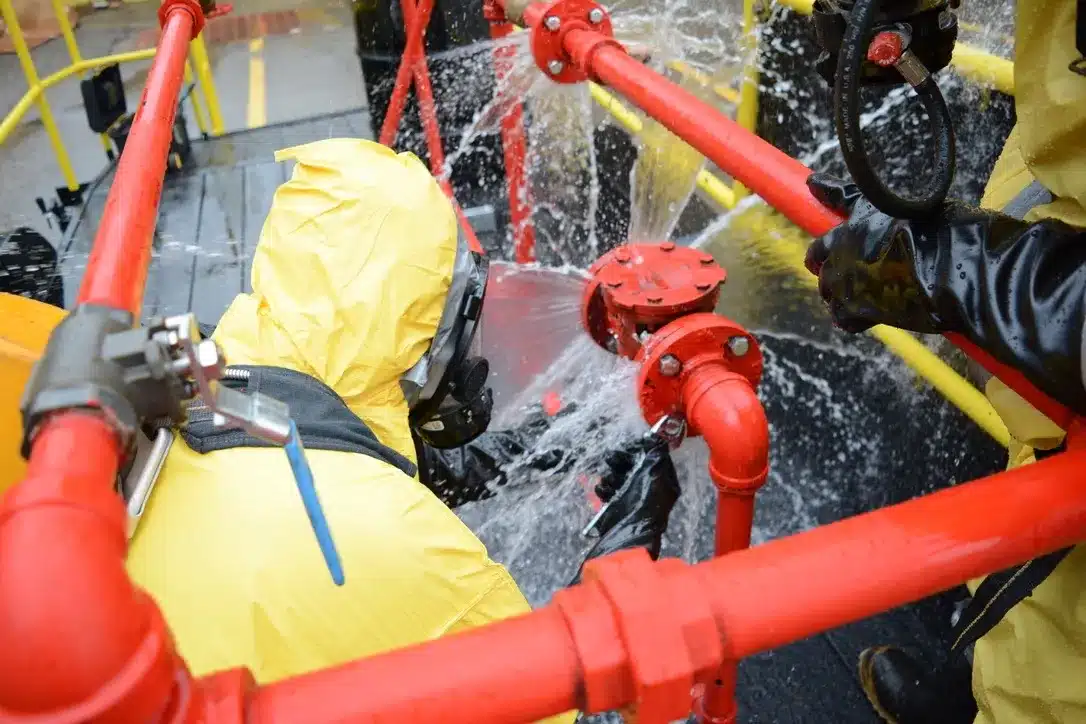
6. Firefighting and Hazardous Material Release Response
Exercise Description:
Trainees respond to a simulated fire involving hazardous materials. This exercise combines firefighting techniques with hazardous material response strategies.
Objectives:
- Learn to assess and respond to fires involving hazardous materials.
- Practice using firefighting equipment and extinguishers.
- Coordinate with emergency responders and follow safety protocols.
Key Activities:
- Simulating a fire and hazardous material release.
- Using firefighting equipment to extinguish the fire.
- Containing and controlling the release of hazardous substances.

7. Medical Response and First Aid
Exercise Description:
This exercise focuses on providing first aid and medical response to individuals exposed to hazardous substances. Trainees practice recognizing symptoms of exposure and administering appropriate first aid.
Objectives:
- Understand the health effects of exposure to hazardous substances.
- Practice providing first aid and medical response.
- Learn to communicate effectively with medical personnel.
Key Activities:
- Recognizing symptoms of chemical exposure.
- Administering first aid and using emergency medical equipment.
- Coordinating with medical responders for further treatment.
Field exercises are vital for HAZWOPER training, offering realistic and practical experience that enhances workers’ preparedness for handling hazardous situations. By engaging in site assessments, PPE drills, containment operations, decontamination procedures, emergency responses, firefighting, and medical response exercises, trainees gain the skills and confidence needed to ensure safety and compliance in the workplace.
Incorporating a variety of field exercises into HAZWOPER training programs not only meets OSHA requirements but also fosters a culture of safety and preparedness. Investing in comprehensive field exercises ensures that workers are well-equipped to protect themselves, their colleagues, and the environment from the risks associated with hazardous materials.